
Most acrylic urethane basecoats with a UV-resistant clearcoat resist Irving’s heat, sun and occasional hail; you should add a ceramic coating or paint protection film for longer UV protection and easier maintenance.
Irving’s Climate Challenges for Automotive Paint
Conditions in Irving combine strong sun, hot summers, and periodic storms that stress finishes; you need paint that resists fading, cracking, and scale from moisture. Choose coatings that tolerate thermal cycling and block UV to preserve gloss and color longer.
UV Exposure and Thermal Expansion
UV radiation accelerates clearcoat breakdown and heat causes panels to expand, making you more likely to see cracking or peeling if the paint lacks flexibility; choose high-UV-resistant base and flexible clearcoats to reduce fading and stress.
Humidity and Surface Oxidation
Moisture from humidity and storms speeds corrosion and causes surface oxidation; you should favor acrylic urethane or epoxy primers and clearcoats with hydrophobic properties to slow rust and maintain adhesion.
When humidity lingers, trapped moisture under chips or at seams accelerates oxidation, so you should prioritize a multi-layer defense: zinc-rich or epoxy primer, corrosion-resistant basecoat, and a flexible urethane clearcoat. Regular washes, prompt chip repairs, and application of hydrophobic topcoats or ceramic sealants further reduce surface oxidation and extend finish life.
Enhancing Resilience with Protective Coatings
Coatings shield your paint from prolonged Texas sun, temperature swings, and airborne grit, letting you keep a cleaner, longer-lasting finish with less frequent need for repainting.
Ceramic Coating Integration
Ceramic coatings form a hydrophobic, UV-resistant layer so you can reduce oxidation and make washing easier while maintaining gloss against Irving heat.
Benefits of Paint Protection Film (PPF)
PPF deflects rock chips, scratches, and chemical stains, giving you durable barrier protection on high-impact panels without altering color or shine.
Applying PPF on the bumper, hood, mirrors and door edges lets you preserve the factory finish where damage is most common; you can choose clear, virtually invisible film or matte options for textured paints. High-quality films self-heal minor scratches, resist yellowing under strong UV, and typically require professional installation for proper edge sealing and warranty coverage, offering long-term savings versus frequent touch-ups in Irving conditions.
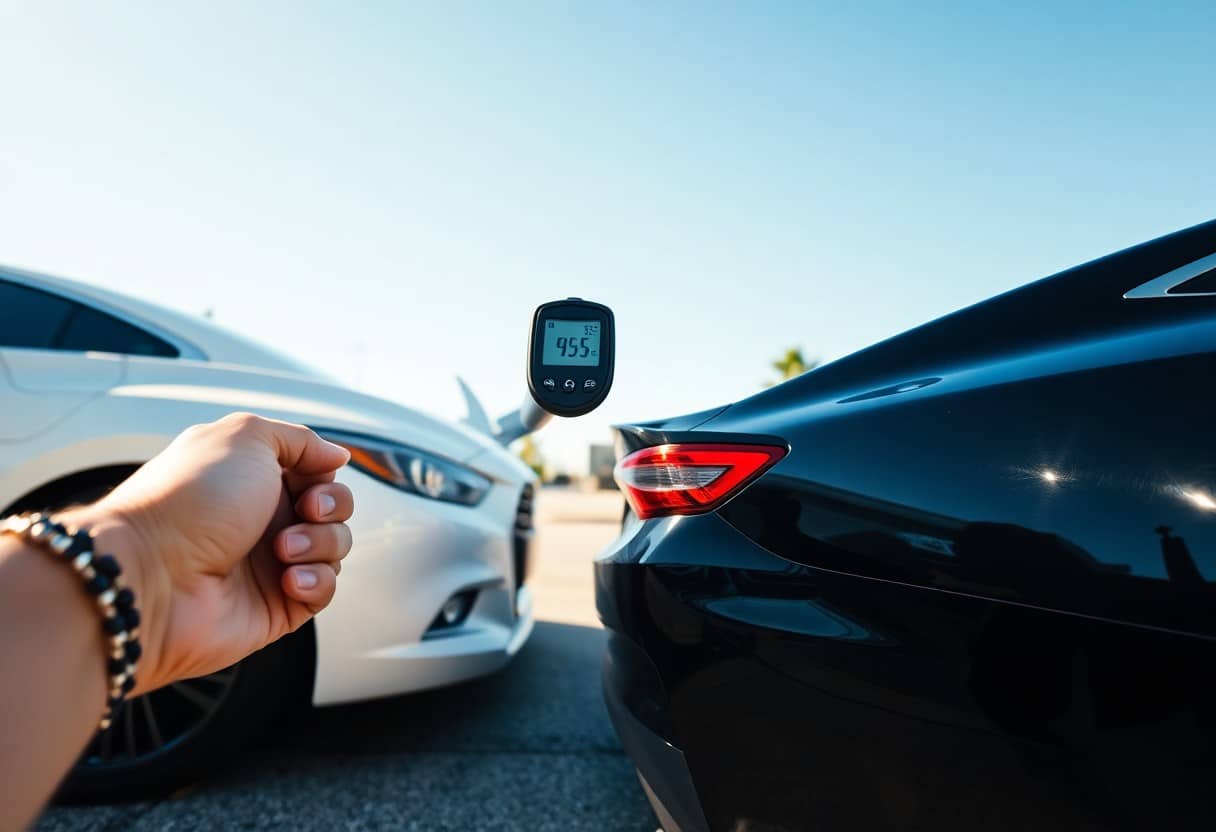
Color Selection and Heat Dissipation
Choosing lighter pigments reduces surface and cabin heat in Irving’s intense sun, lowering AC use and slowing UV-driven paint degradation to keep your finish looking better longer.
Light vs. Dark Pigment Performance
Light paints reflect more solar and infrared energy, so you will experience cooler interiors and slower color fade than with dark pigments that absorb heat in peak summer.
Metallic Finishes and Reflective Properties
Metallic finishes scatter sunlight with reflective flakes, so you can expect modest reductions in surface temperature along with enhanced depth and gloss in bright Irving conditions.
Reflective metallic flakes boost specular reflection across visible and near‑infrared bands, giving you a measurable but limited cooling effect versus flat dark paints; you should weigh that benefit against slightly higher repair costs and visible swirl susceptibility, and plan on quality clearcoat work or ceramic protection to maintain reflectivity and extend color life.
Maintenance Protocols for the Texas Environment
Maintenance habits extend paint life in Irving’s heat and UV; you should prioritize shade parking, regular inspections for chips, and swift touch-ups to stop corrosion and fading.
Regular Decontamination and Washing
Wash your car weekly with pH-balanced soap using the two-bucket method to remove pollen, dust, and brake dust that abrade clearcoat and trap contaminants.
Seasonal Waxing and Sealant Application
Apply a polymer sealant or quality paste wax every spring and fall to boost your car’s UV resistance and shed acidic deposits and tree sap before they etch the finish.
Choose products based on your needs: carnauba gives a warm gloss but shorter protection, polymer sealants last months, and ceramic coatings deliver multi-year durability when applied properly. Prep by decontaminating paint with clay or iron remover and correcting swirls so you don’t trap imperfections. Apply thin, even layers in shaded, cool conditions, allow cure times, and consider professional ceramic installation for warranty-backed longevity.
To wrap up
With this in mind you should choose a high-quality acrylic urethane (basecoat/clearcoat) paint with strong UV-resistant clearcoat, favor lighter or metallic colors to reduce heat absorption, and add a ceramic coating or paint protection film for extra UV, chemical and hail protection.
FAQ
Q: What type of paint finish is best for Irving weather?
A: Irving’s hot summers, strong UV exposure, humidity, and occasional hail favor a two-stage basecoat/clearcoat system with a 2K (two-component) urethane clearcoat. The basecoat provides color and effects, while the 2K urethane clear adds superior UV inhibitors, chemical resistance, gloss retention, and harder surface protection compared with older single-stage or lacquer finishes. Choose a thicker clearcoat layer and UV-stable additives to reduce fading and chalking over time.
Q: Is single-stage urethane or basecoat/clearcoat better for long-term durability?
A: Basecoat/clearcoat with a quality 2K urethane clear offers better long-term performance in harsh sun and heat than single-stage urethane. The separate clearcoat contains UV absorbers and is designed for gloss durability and easier spot repairs. Single-stage urethane can still perform well at lower cost, but it tends to lose gloss and color faster under intense UV and high temperatures common in Irving.
Q: Which color families perform best in Irving’s climate?
A: Light and metallic colors reflect more solar radiation and help limit heat buildup and visible fading, so whites, silvers, and light metallics age more gracefully. Dark colors absorb more heat, show swirl marks and water spots more readily, and can exhibit faster UV-related degradation of the clearcoat. Pearlescent and complex metallics look great but require a high-quality clearcoat and careful maintenance to preserve their effect.
Q: Do ceramic coatings or paint protection film (PPF) make sense for Irving?
A: Ceramic coatings add hydrophobic properties, improved chemical resistance, and extra UV protection on top of the factory clearcoat, extending gloss and easing cleaning. Paint protection film protects high-impact zones from rock chips and helps against minor hail damage on hoods and fenders. Combining a professional 2K clearcoat with ceramic coating for overall protection and PPF for vulnerable areas provides the best practical defense for Irving conditions.
Q: What maintenance practices will keep paint looking its best in Irving?
A: Wash regularly with a pH-neutral car shampoo using the two-bucket method and microfiber tools to avoid scratches. Avoid automatic brushes that can swirl clearcoat. Apply a high-quality wax, synthetic sealant, or reapply a ceramic topper every 6-18 months depending on product to restore UV protection and gloss. Park in shade or a garage when possible and repair stone chips or clearcoat damage promptly to prevent corrosion and further paint failure.